Low-temperature heating: why distribution matters more than the source
You can install the best heat pump on the market and still get mediocre efficiency if the distribution system was designed for a boiler.
Emitter area is efficiency
Heat output rises with the temperature difference between emitter and room. Give the system more surface area and it can deliver the same heat at a lower flow temperature — which is precisely the condition under which a heat pump is most efficient.
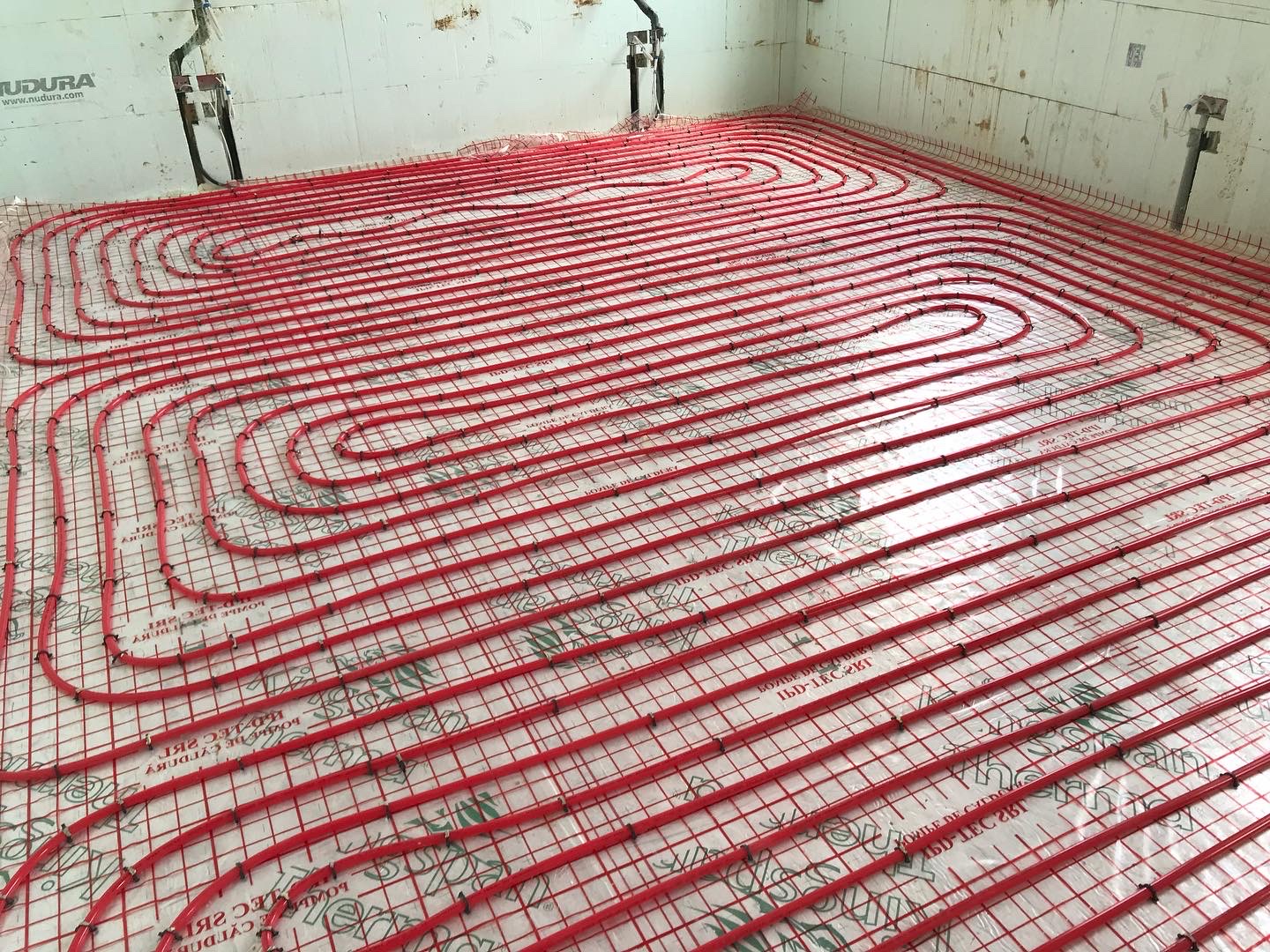
Underfloor heating is the natural fit, with the entire floor plate acting as the emitter. Where floor build-up prevents it, oversized low-temperature radiators or fan coils achieve the same outcome.
The details that decide performance
Pipe centres at 150 mm rather than 200 mm materially raise output in high-loss rooms. Screed depth affects response time. Engineered timber over a floor designed for stone changes the resistance and therefore the required flow temperature — a coordination issue between the mechanical designer and the interior designer, not a site decision.
Balancing and controls
We commission each manifold circuit to its designed flow rate and record it. Weather compensation then keeps the flow temperature at the minimum the day actually requires, rather than a fixed setpoint chosen for the coldest week of the year.
Planning a system where these details matter?
Send us drawings or an outline brief and we will respond with a considered mechanical strategy for your project.
Start an enquiry →